Jobcase AI Career Coaches
Role: Motion Designer
Client: Jobcase
Creative Director: Danica Conneely
Writer: Nate De Leon
I designed and animated the onboarding flow for the launch of their AI-powered career coaches, a new feature that let users choose a coaching persona tailored to their style.
The creative team developed distinct coach personas for users to choose from. My job was to bring that experience to life through a pre-boarding flow that introduced users to the coaches and gave them tips to get the most out of their account.
A thread I wove through all the animations was the use of dots — a nod to the AI chat interface and the intelligence working behind the scenes at Jobcase. It gave the whole flow a visual coherence while subtly hinting at the technology powering it.
All animations were built in Lottie for the app.
Also included is an animatic for a short in-app video introducing the career coaches and walking users through how to create their coach and get help, a concept that was developed but ultimately not produced.
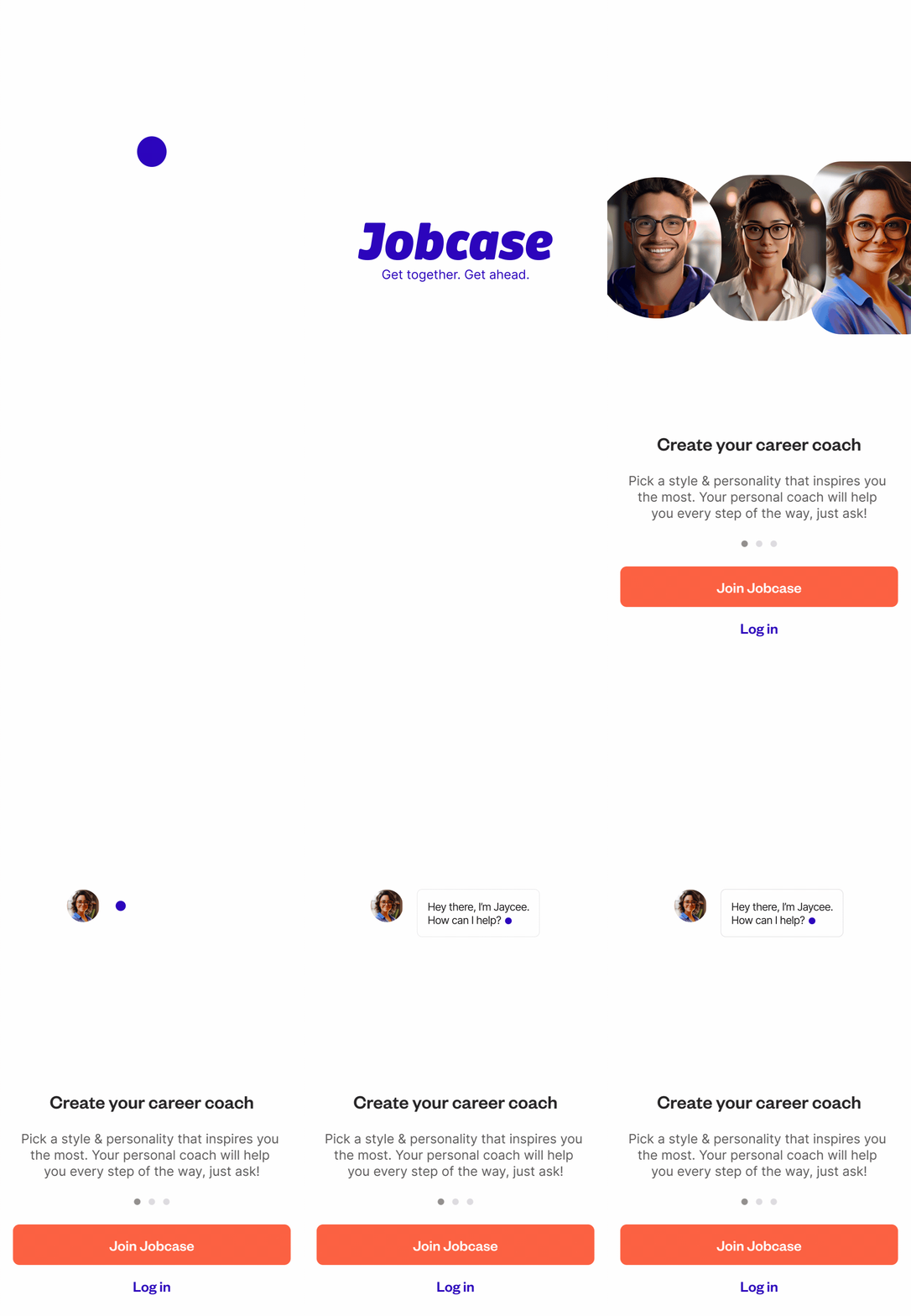
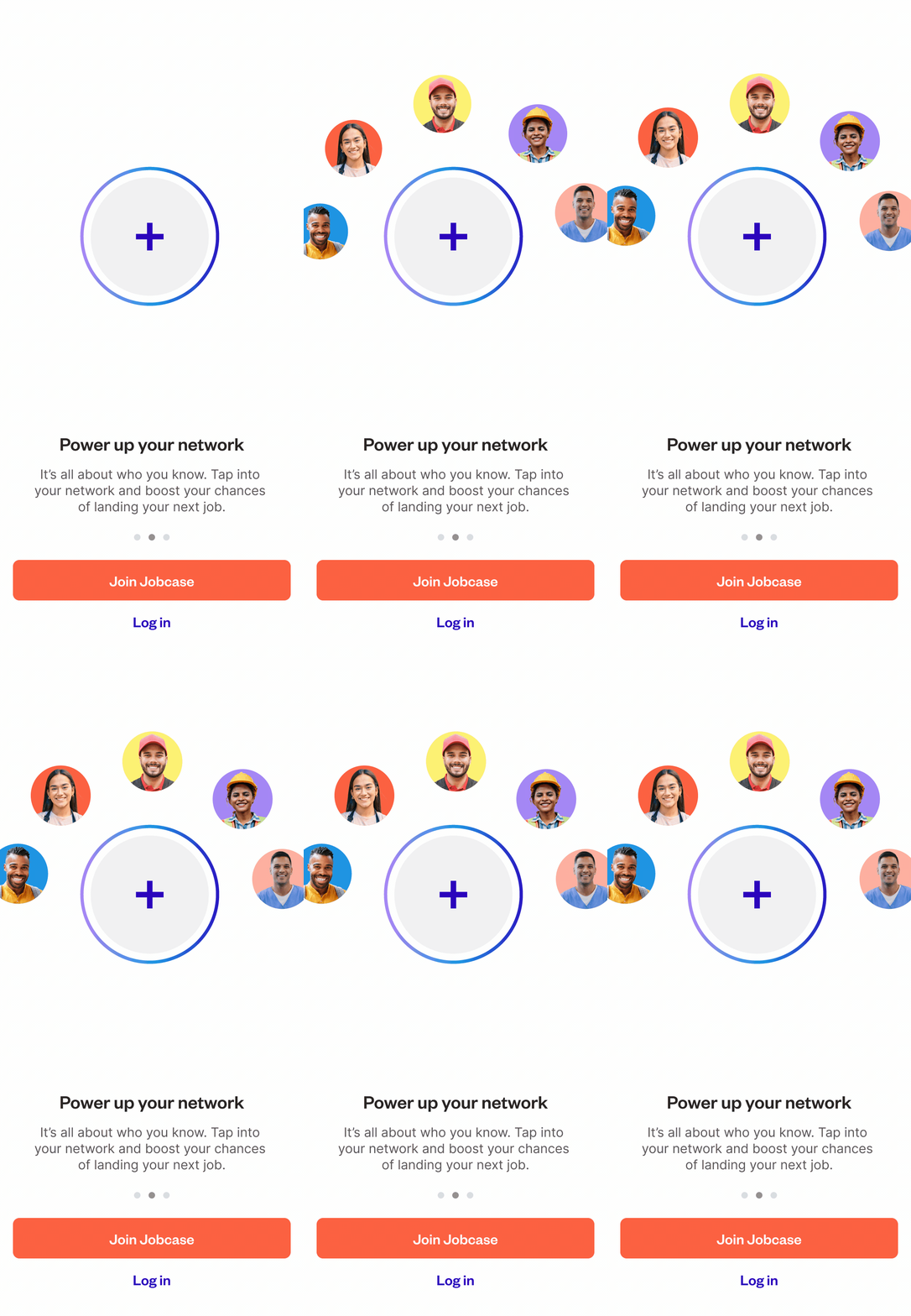

Animatic: Career Coach Intro Video
(concept, not produced)
Unleash
Role: Motion Design
Client: Jobcase
Danica Conneely, Creative Director
Nate De León, Copy
Unleash at Caesar's Palace, Las Vegas
Jobcase isn't just a job board, it's a community of people who show up for each other through every job search, interview, and career challenge. That was the idea we needed to bring to life at Unleash, one of the world's largest HR conferences.
The two screens each told a different part of the story. The corner video wall worked at the emotional level: a flapboard mechanic that opened on a single large portrait before splitting into medium and then smaller ones, expressing the idea that behind every person on Jobcase, there's an entire community cheering them on. The floor-level foyer video brought that concept down to earth, showing a phone with a real Jobcase UI chat, making the community feel tangible and real.
The flapboard was new territory for me, it's inherently a 3D mechanic and I had never approached anything like it before. I started with a template as a base, but the creative direction called for something much more specific — precise control over how many times each flap moved before landing, and where each transition started and ended, moving randomly from left to right. The template couldn't do any of that, so I had to reverse engineer how it worked in order to break it and rebuild it into something that could. On top of the creative challenge, the sheer scale of the screens meant working across 20 After Effects files, exporting every animation with a transparent background, and assembling everything in a dedicated final comp, all while making sure every edge aligned perfectly across the converging walls. Both screens, from concept to final render, were completed in two weeks, solo.
